Slapping the belly of a whale
Définitivement une bonne saison cette année... Slapping the belly of a whale est sorti hier.
Video lo-fi, pas de musique, plein de processus et de chutes sur le cul.
Définitivement une bonne saison cette année... Slapping the belly of a whale est sorti hier.
Video lo-fi, pas de musique, plein de processus et de chutes sur le cul.
Une autre bête noire est tombée. Prochaine étape, Slapping...
Vers 1:50 on entend Jean Hugues qui sort cowboy low :-)
Plus fort des doigts que je pensais finalement...
Vaincu le cowboy à l'issue de 2 séances, la semaine dernière et aujourd'hui. Conditions de send idéales: grosse pluie hier, le top out complétement mouillé, obligés de l'éponger avec nos tshirts et d'attendre 2h que ça sèche :-)
Un journée de température de juillet en automne, moins les mouches.
Réchaud au vélo, ensuite Paparazzi. Mega chute directement à l'extérieur de la zone de réception...
Pour finir, une vraie blague d'escalade dans le V1 le plus sandbang de Val-David. Du moins, c'est un bon contender avec Félix le chat.
Une grosse bête est tombée en fin de semaine, Top Secret à Val-David.
Merci à Charlie pour la caméra ainsi qu'à Pascal et Dave pour les judicieux conseils de send, c'est à dire relaxer et bien repirer ;-)
Petite sortie en départ alpin à Val-David jeudi matin. Galactic Denied, finalement envoyé au dernier essai avant de revenir en ville.
Les mots du curé Morin m'ont inspirés à retourner au Lac Long cette semaine:
Il est de ces choses, telle l'éthique du grimpeur, qui étant de nature intrinsèque et personnelle, ne peuvent être jugées que par le protagoniste lui-même.
Amen
À la lecture de ce message, la bonne chose à faire m'est apparue claire: retourner envoyer One night stand sans donner de coup de pied au bloc de gauche dans la sortie...
Voici donc un autre video lo-fi aux blocs du lac long.
Même concept que la dernière fois, les numéros des blocs sont basés sur le topo du Festiroc 2017
On a aussi brossé un truc dur avec-pas-de-pied, ça prendra quelqu'un de fort ou un magicien pour envoyer ça, j'ai hâte de voir :-)
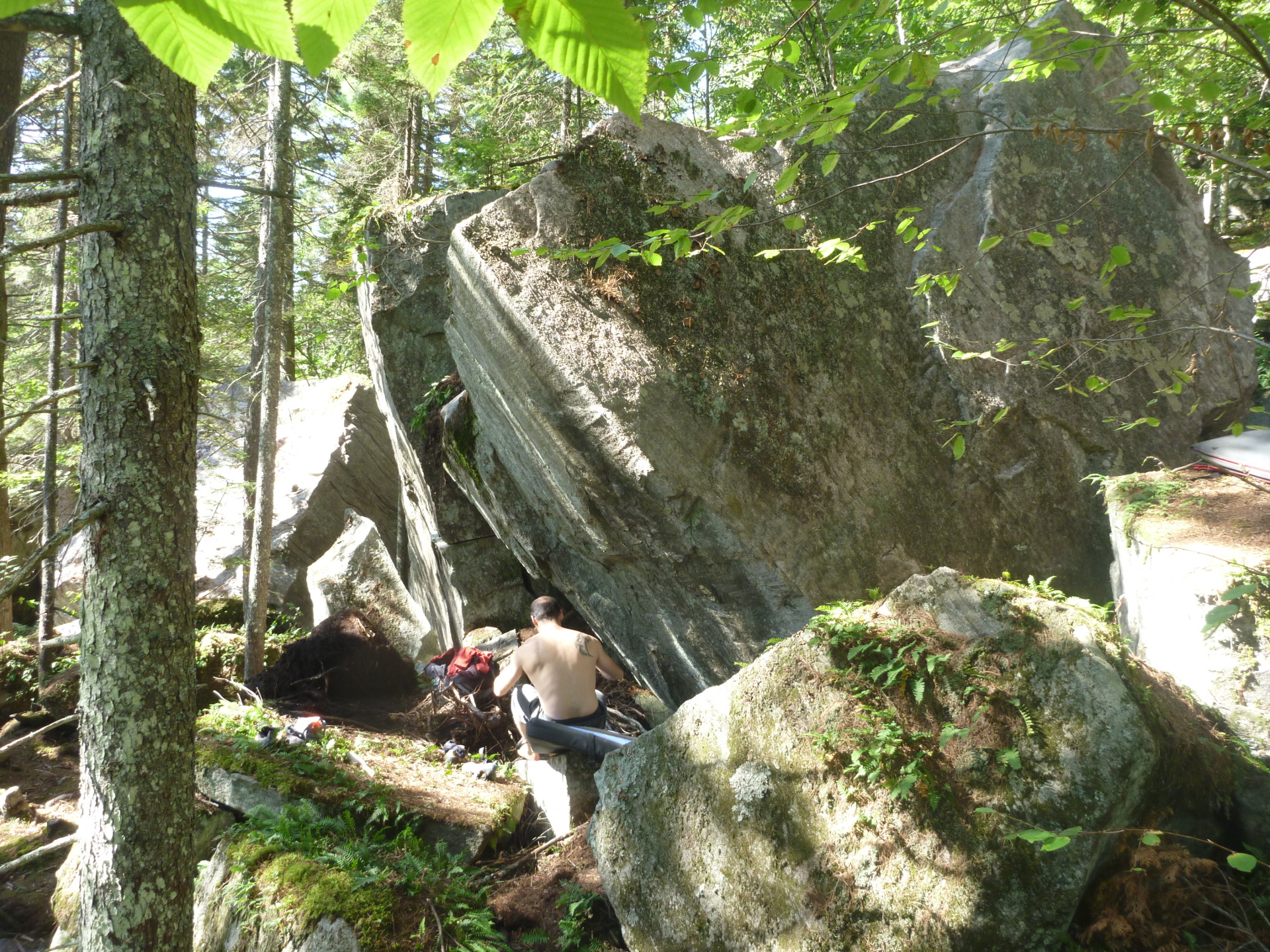
Video lo-fi de quelques blocs envoyés aux Lac Long dans Portneuf ce weekend.
Les numéros des blocs sont basés sur le topo du Festiroc 2017
Dans l'ordre:
Note: Les cotations de All about love et One night stand semblent inversées dans le topo.
Un problème qui m'a semblé plus difficile que ce qui est indiqué dans le topo... (v6/7) On dirait bien que je pose mes fesses sur le bloc pendant la sortie à vous de juger s'il y a eu touchette, perso j'y retourne pas :P
I've been thinking about running OpenBSD again for a while now, yesterday I had some inspiration and decided to try to boot it on OVH's VPS machines.
OVH doesn't have the best reputation regarding availability and support (both of which I confirmed in the past...), but they are cheap and they have a datacenter in Beauharnois, Qc, that's less than 50km from home.
They're only offering Linux distribution for their VPS SSD instances at the moment, but since the virtualzation technology is KVM, booting the OpenBSD ramdisk kernel (bsd.rd) and doing the installation is all that is needed to get a working OpenBSD machine.
Here's how I did it.